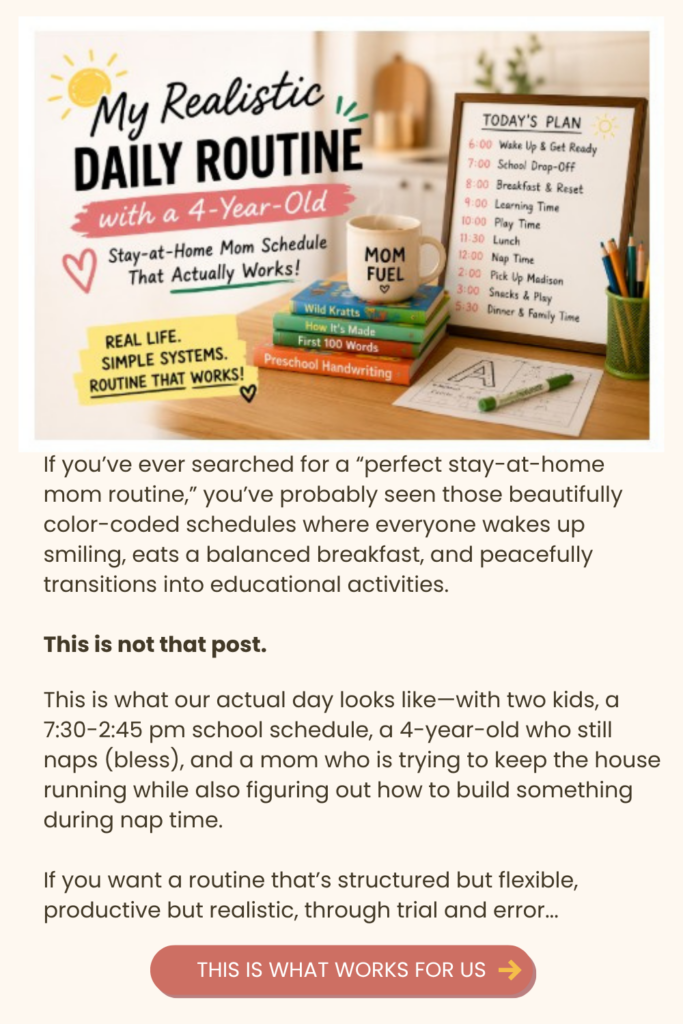
If you’ve ever searched for a “perfect stay-at-home mom routine,” you’ve probably seen those beautifully color-coded schedules where everyone wakes up smiling, eats a balanced breakfast, and peacefully transitions into educational activities.
This is not that post.
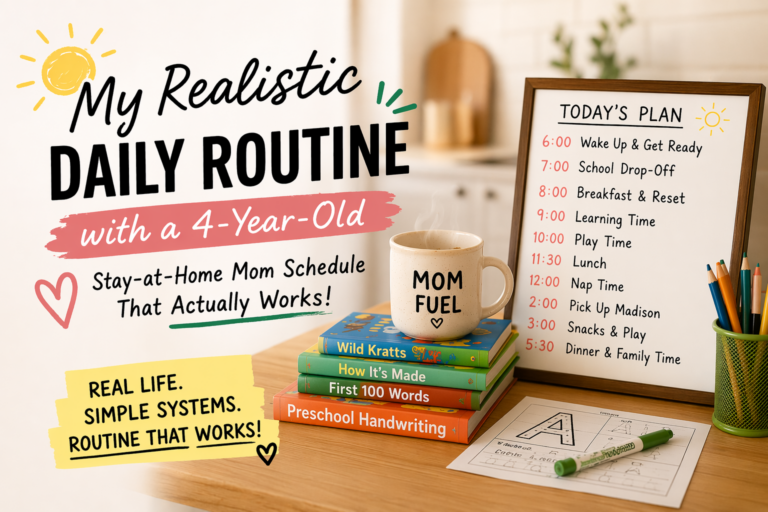
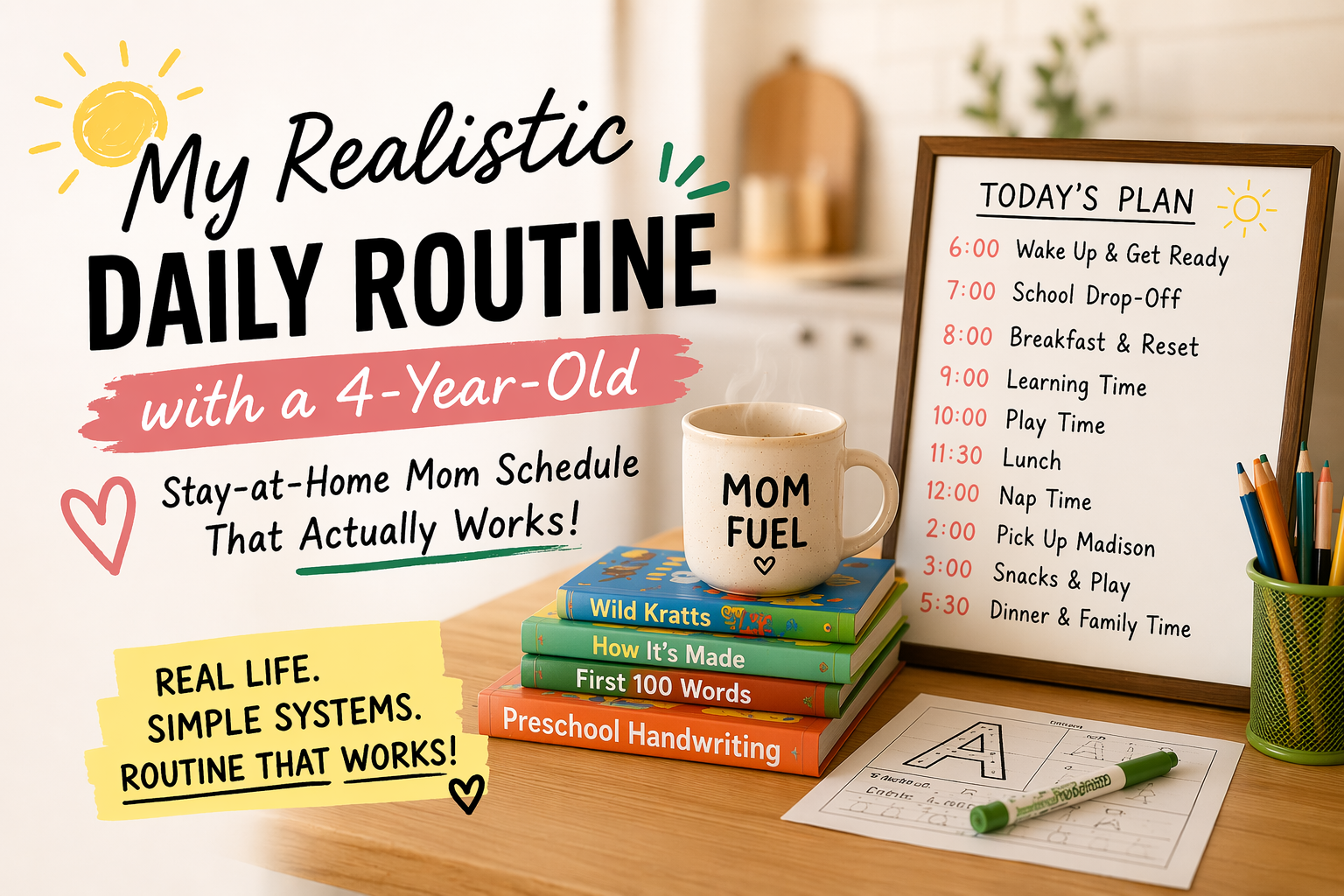
This is what our actual day looks like—with two kids, a 7:30-2:45 pm school schedule, a 4-year-old who still naps (bless), and a mom who is trying to keep the house running while also figuring out how to build something during nap time.
If you want a routine that’s structured but flexible, productive but realistic, through trial and error, this is what works for us.
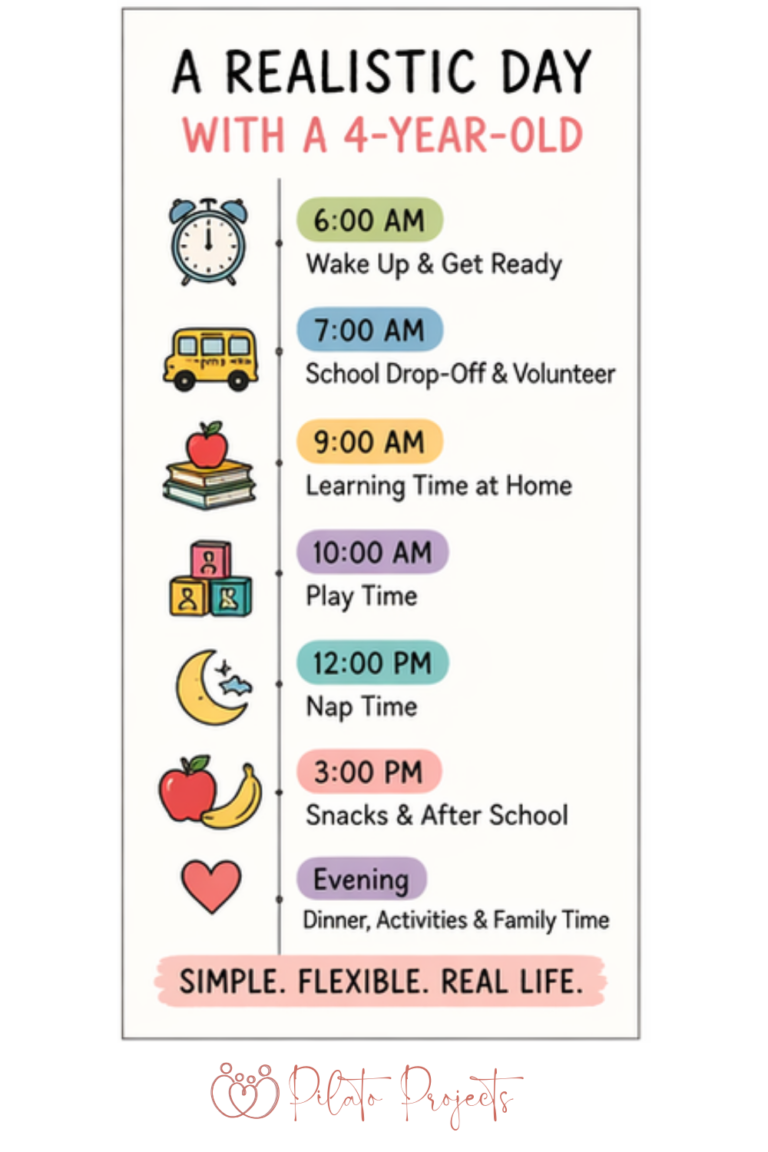
Morning Routine (6 AM – 8 AM)
Our day starts early—like, painfully early. At 6:00 AM, I wake up my daughter for school. We keep everything easy for her to grab so she can be independent. A simple folding step stool in every bathroom has made a huge difference for us.
We keep things simple:
- She brushes her teeth
- I help her get dressed
- We reluctantly do her hair
- She put on her socks and shoes
While she’s doing that, I’m in the kitchen making breakfast, while my husband (bless his heart) packs her lunch. Of course you can pack lunches the night before. We use a bento-style lunch box, which is perfect for packing quick, balanced lunches without overthinking it.
Meanwhile… my 4-year-old is asleep. Living his best life.
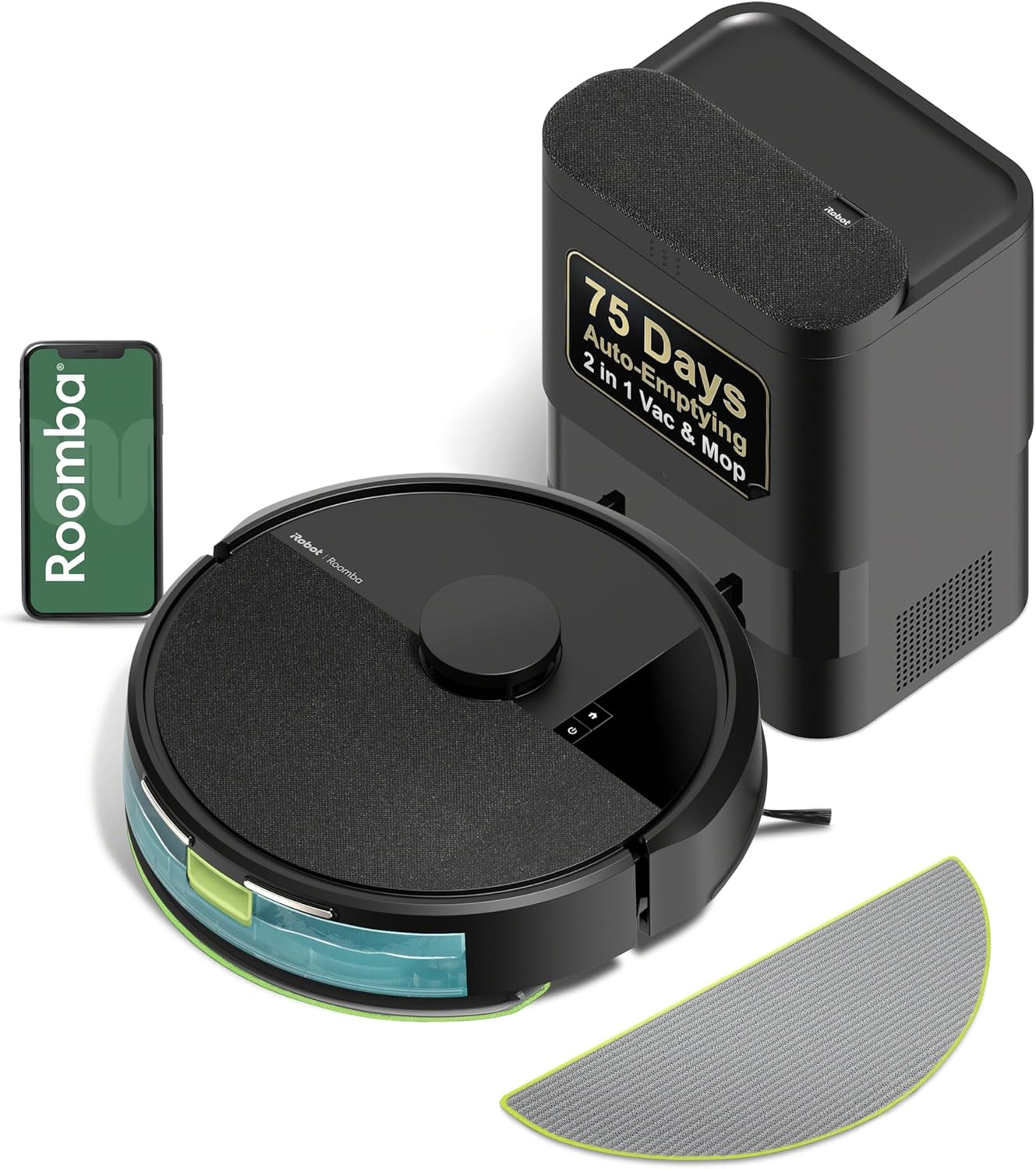
At 7:00 AM, it’s go-time. I go back upstairs to make the beds, and pick up anything on the floor in the bedrooms; Then I turn on my iRobot Roomba Vacuum to do its thing while were out.
I wake up my 4-year-old son (who insists in staying in his jammies) and we head out the door for school drop-off. My son and I volunteer in the car pickup line until about 7:45. It’s a small thing, but it’s become part of our morning rhythm. We’re usually back home around 8:00 AM.
Do you have a child at home, and want to volunteer? There are many opportunities if you think outside the box. The car line for example. My son bundles up with a nice warm blanket in a stroller I paid way too much for. We play a game of learning each car’s logo as they drive last. My son can now recognize quite a few cars. The learning opportunities are endless.
Morning Slowdown (8 AM – 9 AM)
This is one of my favorite parts of the day. Once we’re home:
- My son an and I make breakfast together
- We sit and eat (no rushing)
- He gets some TV time after. It’s usually a learning show. He loves watching ‘Wild Crats’ or ‘How it’s Made’ on Youtube.
And I use this window to:
- Put clean dishes away
- Reload some laundry
- Reset the kitchen or play room
- Or just sit and read my latest book with my coffee for a few minutes
Nothing fancy. Just a soft reset before the day really starts.
“School Time” at Home (9 AM – 10 AM)
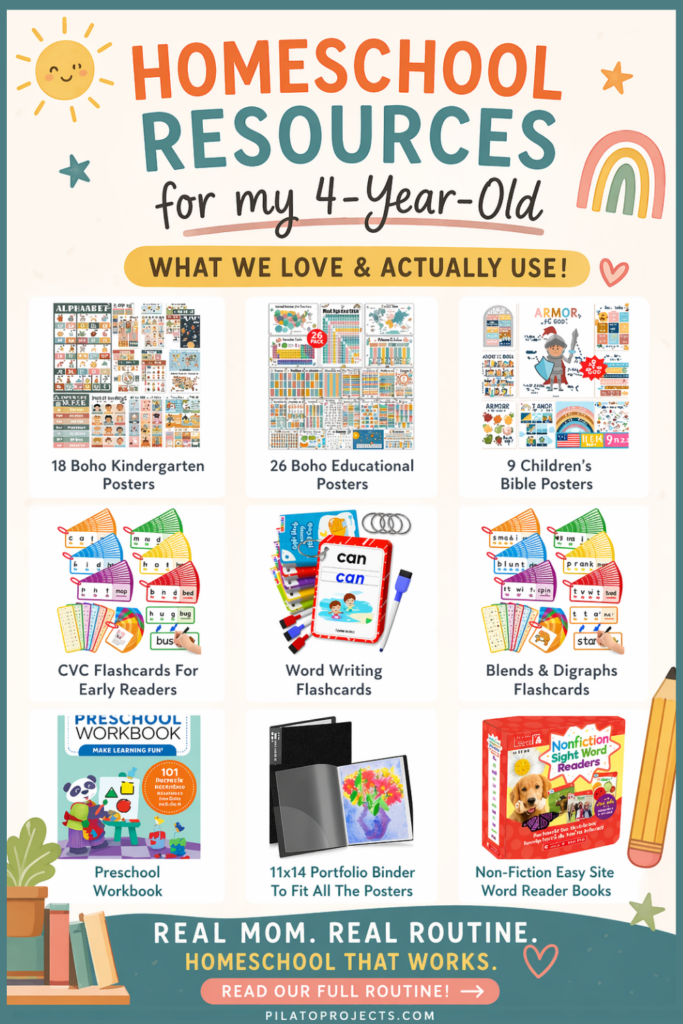
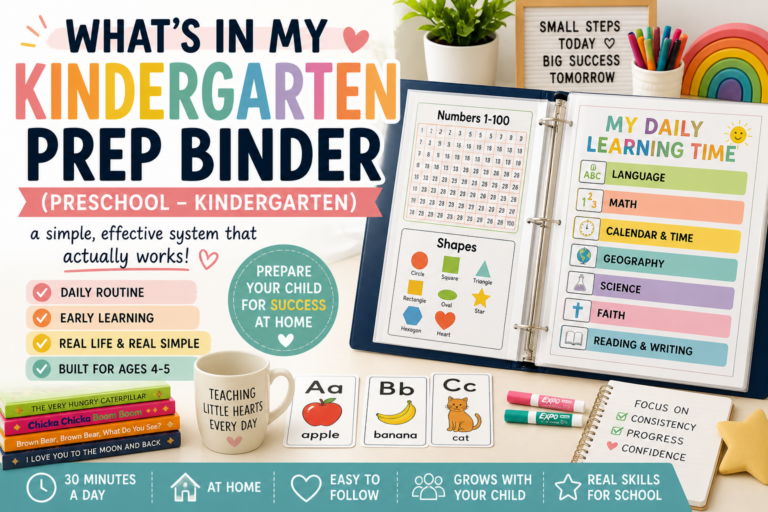
At 9:00 AM, we shift into learning mode. We use a super simple system—a school binder that I put together. If you’re building something similar, I highly recommend:
Here’s what that hour looks like:
1. Binder Time (about 30 minutes)
- Language: Letters and their sounds song from reading.com, Phonetic sounds, cursive letters, Diaphragms, & practice sounding out three-letter words.
- Math: Numbers and counting, evens, odds, counting by 5’s and 10’s. Spot check. & Shapes
- Sing Months of the year & Days of the week songs. Today’s date, Holidays, & time concepts.
- Culture: The pledge of allegiance, social manners, money/coins.
- Geography – Introduce more US States every week, 7 Continents & 5 Oceans
- Science: Planets, periodic table, Parts of the body, the 5 Senses
- Christian: The Lord’s Prayer, 10 commandments, our praying hand
It’s not Pinterest-perfect. It’s just consistent.
2. Reading or Writing (20 minutes)
We’ll either:
- Practice tracing and writing (we love these Preschool and Kindergarten handwriting workbooks. Really anything by Keri Brown.)
- We also trace and write with these Site word flashcards.
- Read flashcards. These are my favorite: CVC Flashcards
- Complete a course on the Reading.com app
- Flip through these site word reader books together.
Some days are great. Some days he’s wiggly and over it in 5 minutes. Both count.
Get It on Amazon
18 Boho Kindergarten Posters
Amazon
26 Boho Educational Posters
Amazon
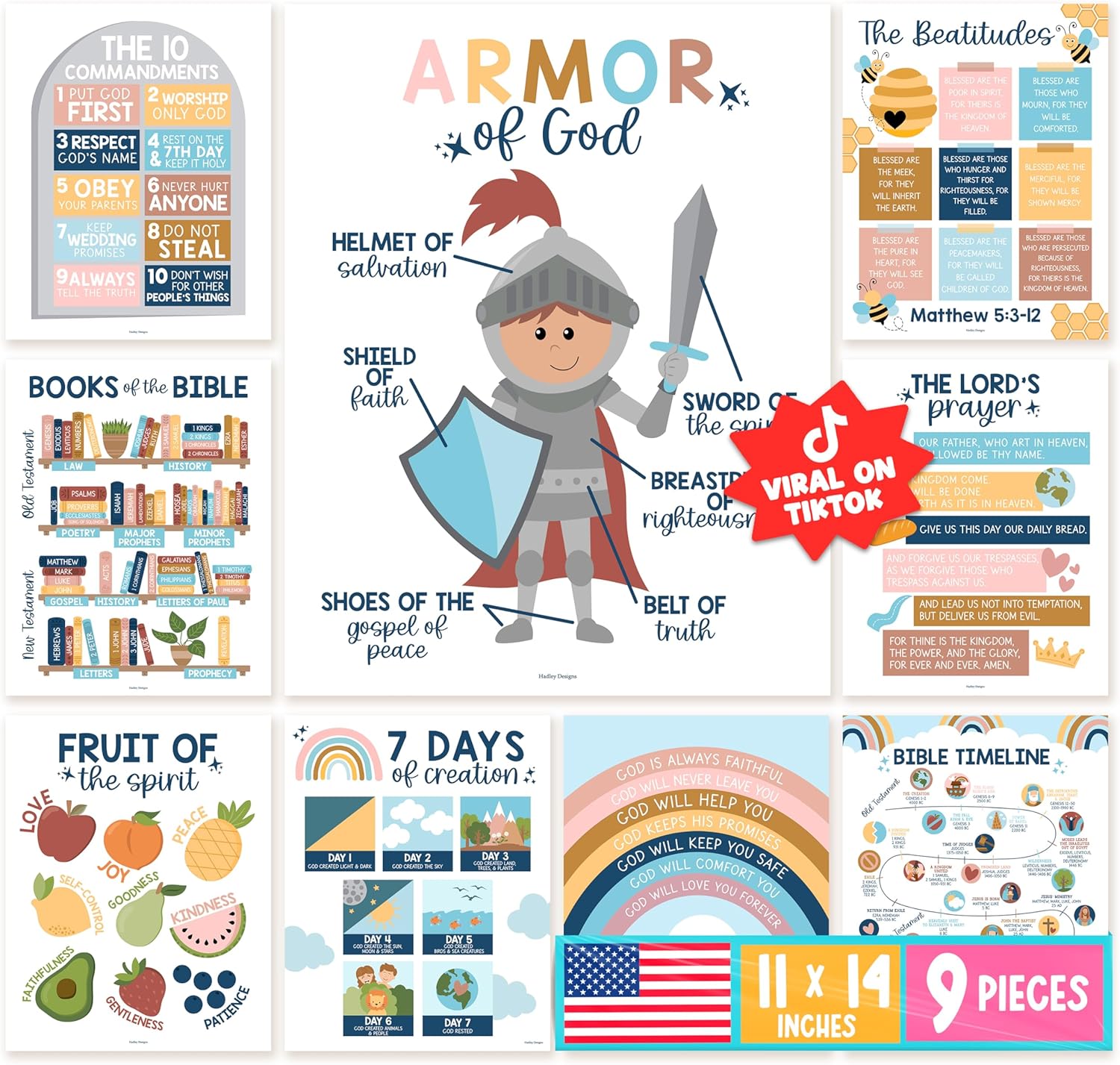
9 Children's Bible Posters
Amazon
CVC flashcards for early readers
Amazon
word writing Flashcards
Amazon
Blends & Digraphs flashcards
Amazon
Preschool Workbook
Amazon
11x14 Portfolio Binder to fit all the posters
Amazon
Non-fiction easy site word reader books
AmazonPlay Time + Real Life (10 AM – 11:30 AM)
After structured learning, we move into… life. This usually looks like:
- Playing with his toys
- Playing a game like Uno, Memory Matching, and Dino Bingo.
- Going outside to practice baseball or jump on the trampoline
- Me cleaning something while he plays nearby
We’ve set up our home so he can access most of his things on his own—low shelves, simple bins, nothing complicated. It cuts down on the constant “mom can you get this?” by a lot.
Lunch + Nap (11:30 AM – 2 PM)
We eat lunch around 11:30 AM, and then at 12 PM, I lay down with my son for his nap. We turn on my Air purifier for some white noise and say ‘Alexa play sleep sounds on Apple music’. He naps for about 2 hours. And this is where I’m going to be honest. This is supposed to be my “productive time.”
Sometimes I Read a great book. Here are my book recommendations… Or i Clean the bathrooms or kitchen or laundry. And sometimes… I work on my blog.
I’ve started treating this window as my focus time, and even doing just one small task (writing a blog post, creating a meal plan, or organizing our schedule) makes a difference.
School Pickup + Afternoon (2 PM – 3 PM)
At 2:00 PM, I wake my son up, and we head out to pick up my daughter. Her School gets out at 2:35 PM, and between walking and loading up, we’re home around 3:00 PM. The first priority when we walk in the door? Snacks. Always snacks.
We keep things easy with grab-and-go options at their level like:
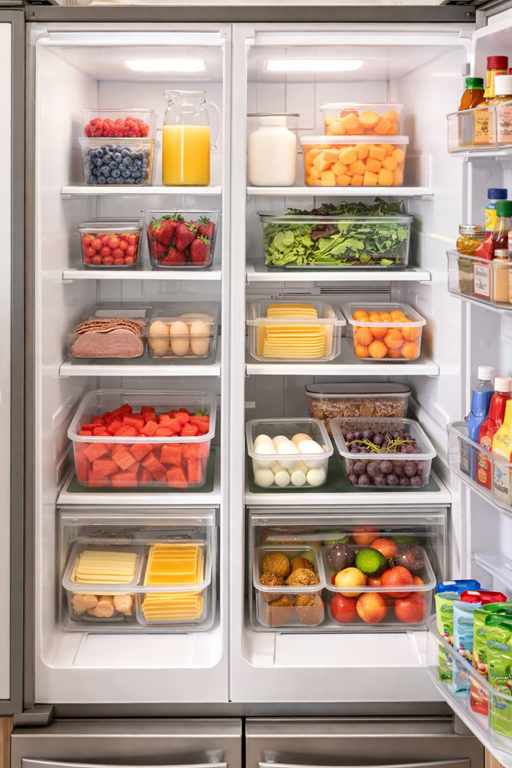
Fruit + Veggies (in Season)
- Pre-cut Watermelon or Cantelope
- Apples, Peaches, or Pears
- Tangerines or Oranges
- Bananas
- Grapes
- mini carrots
- pre-sliced cucumbers
Dairy + Protein:
- Cheese cubes
- Yogurt pouches
- hard boiled eggs
- Salami or Prosciutto rolls
- Mini banana muffins
- Energy balls
Pantry:
- Fruit bars
- Granola bars
- Crackers in containers they can reach
After School Routine (3 PM – Evening)
This part of the day changes depending on the day, but generally:
- Kids snack and play or do homework on the kitchen table
- I figure out dinner (or start cooking) I usually prep everything on Sunday so it’s quick set up.
- Sometimes we go outside and practice hitting baseballs
- Sometimes I clean or I just sit and watch them play
We also:
- Do homework together – This is when my son likes to write in worksheets that are easy enough to do on his own while my daughter does her homework next to him.
- Head to the gym. The kids love going to the gyms ‘kids club’. Thank you Golds Gym 🙏🏼 this makes my motivation to go so much easier! Find out if your local Gym offers child care.
And then we rotate through activities:
- Mondays: Groceries and errands
- Tuesdays: Karate
- Wednesdays: Awana – Find a local chapter near you.
- Thursdays: Parks, Play dates, or check out books at the Library
- Fridays: Karate again
Dinner is usually something simple. Since I became a stay-at-home mom, we rarely go out to eat. I don’t like to spend a ton on groceries either so I stick to our tried and true recipes. I also rely a lot on my slow cooker for the late days—it saves me more times than I can count.
What Actually Makes This Routine Work
Here’s the part that matters most.
This routine works not because it’s perfect, but because....
1. We have our day with a few consistent times
- School drop-off
- Learning time
- Nap time
- Pickup
- Dinner
Everything else flexes around that.
2. I don’t over-plan activities. Kids don’t need constant entertainment. They need:
- Space
- Consistency
- Simple and Clear Expectations
3. I use simple systems that support independence. Small things make a big difference.
- Step stools
- Easy-access snacks
- Simple learning setups
- Organized play spaces
- Safe Outdoor play spaces
- Yes spaces
3. I use simple systems that support independence. Small things make a big difference.
Some days I work during nap time, or I clean. Sometimes I sit and do nothing. And honestly? All of those are valid.
Final Thoughts on this Routine
If you’re trying to build a routine at home with kids, here’s what I’d say:
You don’t need a perfect system. You need:
- A few predictable rhythms
- A little structure
- And a lot of flexibility
Your days won’t always go as planned. But if you have a simple foundation to fall back on, everything feels a whole lot easier. And that’s what actually works.